

What Are the Best Apartment Essentials for First Timers?
Last Updated: October 25, 2026
Quick Summary
The best apartment essentials for first timers are bought in phases: move-in day items like a mattress, sheets, towels, toiletries and basic dishes, then first-week items like cookware, cleaning supplies and tools, and later décor and extra furniture. Buy only what you need when you need it.
- Buy Tier 2 items only when you notice you need them twice.
- Spend the largest share of your move-in budget on the mattress.
- Buy four towels rather than two so you're never caught mid-laundry.
- Agree with roommates on shared versus personal items before move-in day.
- Measure shelf depth, closet width and under-bed clearance before buying storage bins.
Table of Contents
- Your First Apartment Checklist: What to Buy First, Week One, and Later
- First Apartment Kitchen Essentials: Cookware, Tools, and Small Appliances
- Bedroom and Bathroom Basics: Mattress, Bedding, Towels, and Storage
- First Apartment Cleaning Supplies and Tool Kit
- Apartment Essentials on a Budget: Where to Save and Where to Spend
- Small-Space and Shared-Apartment Solutions: Storage That Works
- What to Check Before You Buy or Bring Anything In
- Stock Your First Apartment the Smart Way
- Frequently Asked Questions
Your First Apartment Checklist: What to Buy First, Week One, and Later
Moving into a first apartment is exciting, but the number of things to buy can overwhelm anyone. The key to figuring out the best apartment essentials for first timers is simple: buy in phases instead of furnishing everything at once.
The biggest mistake is buying everything on day one, then realizing half of it doesn't fit or duplicates what a roommate owns.
Move-In Day: The Non-Negotiables
These are the items you genuinely need before your first night: a mattress or air bed, sheets, a pillow, a towel, a shower curtain if your bathroom lacks one, toilet paper, and basic toiletries. Add a few dishes, a mug, and a frying pan so you can eat something other than takeout.
- Mattress and sheets
- Pillows and one blanket
- Bath towels and a bath mat
First Week: Comfort and Function
Once you've slept a night or two, fill in the gaps that make daily life work. This is where a first apartment checklist earns its keep: cookware, a cutting board, cleaning supplies, laundry detergent, a mop or broom, and a small tool kit. Buy these as you notice you need them.
Later: The Nice-to-Haves
Décor, extra seating, a full-length mirror, storage bins, and lighting upgrades can wait. Live in the space for a month first. You'll learn how you actually use each room, and you'll avoid buying things that end up in a closet.
| Phase | What to Buy | Why It Can't Wait |
|---|---|---|
| Move-in day | Mattress, sheets, towels, toiletries, basic dishes | You need to sleep, wash, and eat |
| First week | Cookware, cleaning supplies, laundry gear, tools | Daily routines depend on them |
| Later | Décor, storage, extra furniture, lighting | You'll know the space better |
First Apartment Kitchen Essentials: Cookware, Tools, and Small Appliances
The first apartment kitchen essentials list is shorter than most people think: one good pan, one pot, a cutting board, a knife, a spatula, a mixing bowl, and something to eat off.
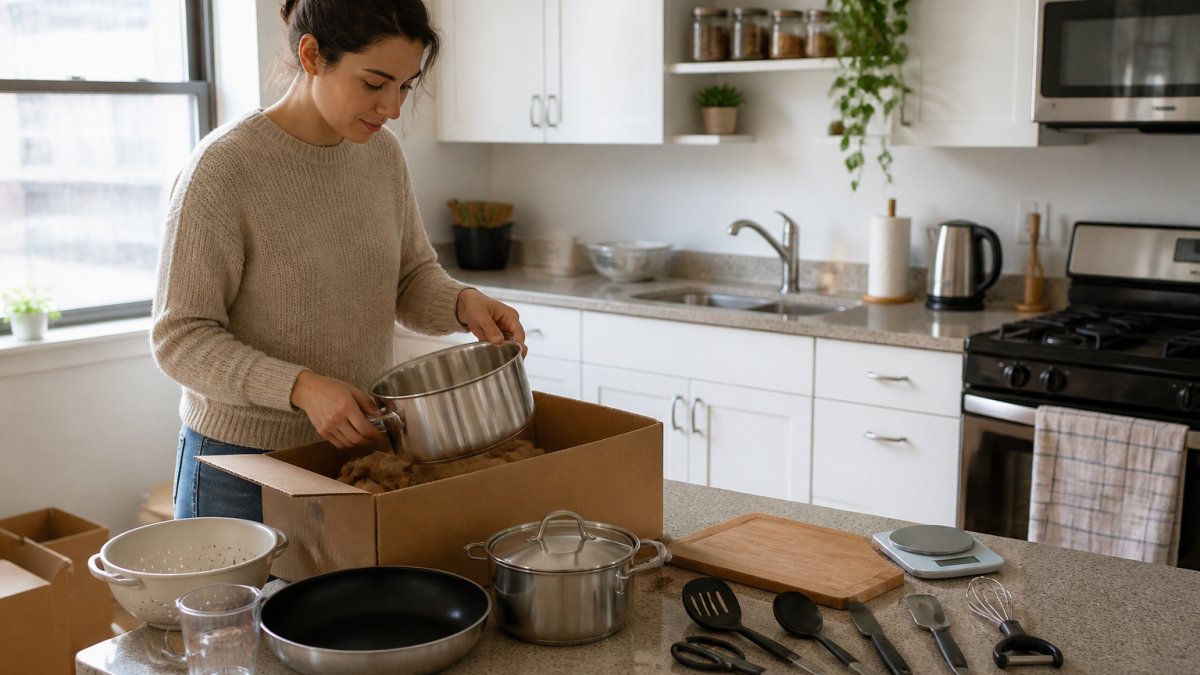
Start with a cookware set rather than individual pieces. Our 9-piece cookware set covers frying pans, a saucepan, a stock pot, and a sauté pan, all induction compatible with a ceramic nonstick surface free from PFAS, PTFE, and PFOA.

For prep work, a bamboo cutting board set handles vegetables, meat, and bread without dulling your knives. Add a small digital kitchen scale if you bake or follow recipes closely; it weighs up to 500 g with 0.1 g accuracy and takes up almost no drawer space.


Watch out: Don't buy a full knife block or a stand mixer in your first month. Most first-time renters use a chef's knife and a whisk for months before touching anything fancier.
Bedroom and Bathroom Basics: Mattress, Bedding, Towels, and Storage
Your bedroom and bathroom take the largest share of your starter budget, and cheap choices cost you most here: a bad mattress ruins your sleep, and thin towels feel worse every week.
For the bed, a memory foam and spring hybrid gives you both pressure relief and support. Our memory foam spring mattress combines gel foam, memory foam, and pocket springs.
In the bathroom, buy four towels rather than two so you're never caught mid-laundry. A bath mat prevents slips, and a shower curtain liner keeps water where it belongs. Toiletries, a toothbrush holder, and a small trash can finish the room.
Storage often gets skipped, then becomes urgent. A bathroom cabinet tower with three drawers and two open shelves fits a 30 cm footprint, holds up to 10 kg per shelf, and keeps toilet paper, towels, and cosmetics off the floor.
First Apartment Cleaning Supplies and Tool Kit
First apartment cleaning supplies should live in one caddy under the sink: all-purpose cleaner, glass cleaner, bathroom disinfectant, sponges, a scrub brush, microfiber cloths, a mop, a broom, and dustpan.
Then build a basic tool kit. A 228-piece socket wrench tool set covers household repairs and assembly jobs.
- All-purpose and bathroom cleaner
- Sponges, scrub brush, microfiber cloths
- Mop, broom, dustpan
Watch out: Skip aerosol cooking sprays and abrasive pads on nonstick cookware. They wear the coating faster than anything else, and a soft sponge with warm water does the job.
Apartment Essentials on a Budget: Where to Save and Where to Spend
Setting up an apartment on a budget is about sequencing and trade-offs, not deprivation. Think in three tiers, a bare-bones move-in kit, a functional first-month kit, and a comfort kit, and know which items are worth paying up for versus which are safe to buy cheap or secondhand.
Tier 1: Bare-Bones Move-In Kit (Buy First)
These are the items you cannot function without on night one. Buy them new unless you have a trusted source for hand-me-downs, and prioritize function over style.
- Mattress or air bed, sheets, one pillow, one blanket
- Two bath towels and a bath mat
- Shower curtain and liner if the unit lacks one
Spend the largest share of the Tier 1 budget on the mattress, since sleep quality affects everything else and a cheap mattress is the item most likely to be replaced within a year.
Tier 2: Functional First-Month Kit (Buy as You Notice Need)
These items make daily routines work but can be bought over the first few weeks as you use the space, and buying cheap is usually safe.
- Cookware: one saucepan, one stock pot, a cutting board, a chef's knife, a spatula, a mixing bowl
- Cleaning supplies: all-purpose cleaner, bathroom disinfectant, sponges, microfiber cloths, mop, broom, dustpan
- Laundry detergent and a hamper
A practical rule: buy Tier 2 items only when you notice you need them twice. That prevents the most common first-apartment waste, a full kitchen setup bought before you know how you cook.
Tier 3: Comfort and Décor Kit (Buy Later)
Décor, extra seating, side tables, a full-length mirror, lighting upgrades, and small appliances beyond a kettle and toaster can wait. Live in the space for at least a month first to learn how each room is used, and you'll avoid purchases that end up in a closet.
Where to Spend vs. Where to Save
Spend here:
- Mattress and pillows, sleep affects everything, and this is the item most often replaced too soon
- One good cookware set instead of three cheap pans, a single durable set usually outlasts and outperforms mismatched cheap pieces
- A sturdy tool kit you will keep for years
Save here:
- Décor and wall art, add slowly, and only after you know the space
- Extra seating and side tables, often the first items to become clutter
- Small appliances beyond a kettle and toaster, most first-time renters use only a few regularly
Low-Cost and Secondhand Alternatives
Secondhand and borrowing stretch a budget further than most people expect. Family members often have spare dishes, a microwave, or a bookshelf, and local marketplaces and moving sales are good sources for solid wood furniture that's often cheaper and sturdier than new flat-pack. Check every item for cracks, missing hardware, water damage, and pests; for soft goods like mattresses and upholstered furniture, buying new is usually safer.
Small-Space and Shared-Apartment Solutions: Storage That Works
Small apartments and shared homes punish clutter fast, and the fix is vertical storage, clear zones, and a shared plan, not more furniture. The biggest gains come from using wall height and under-utilized spaces rather than adding floor-standing pieces.
Vertical and Hidden Storage That Actually Fits
A few storage moves that can work well in tight spaces:
- Use vertical shelving in the bathroom instead of floor baskets. A narrow cabinet tower with a small footprint can help keep toilet paper, towels, and cosmetics off the floor and use height the room already has.
- Add a sink-side organizer to keep sponges and soap off the counter, which frees prep space in small kitchens.
- Store off-season clothing in bins under the bed. Flat bins sized to the bed frame use space that is otherwise wasted and keep seasonal items out of closets.
First-time renters often buy storage containers before measuring the spaces they intend to fill. Measure shelf depth, closet width, and under-bed clearance first, then buy bins that fit.
Shared-Apartment Coordination
Shared apartments need one more thing beyond storage: a conversation before move-in day. Agree on who buys what so you don't end up with three kettles and no mop. A simple split works:
- Shared items: cleaning supplies, cookware, dishes, trash bags, and a shared tool kit, split the cost or assign owners
- Personal items: toiletries, towels, bedding, and food, keep separate and labeled
- Communal zones: agree on a cleaning schedule and where shared items live so they do not migrate into bedrooms
What to Check Before You Buy or Bring Anything In
Before you spend money or accept a hand-me-down, run through a short check. It saves returns, arguments, and wasted space.
- Measure the space. Doorways, stairwells, and elevator dimensions matter as much as the room itself.
- Check your lease. Some buildings restrict curtains, wall anchors, or large appliances.
- Inspect secondhand items. Look for bed bugs, water damage, and broken hardware.
- Confirm what's included. Ask your landlord about a shower curtain, blinds, and appliances before buying duplicates.
- Check return policies. Read the fine print before ordering online, especially on mattresses.
[A consumer advice guide from the FTC | consumer.ftc.gov] explains your rights on online purchases and returns.
Stock Your First Apartment the Smart Way
The right list in the right order can help with apartment essentials for first timers. Buy the basics for night one, add function in week one, and let the rest follow as you learn how you live in the space.
If you want a simpler path, start with the pieces that do the most work.
Get started with Velo Shop X and set up your first apartment.
Frequently Asked Questions
What should I buy first when moving into my first apartment?
Start with the items you cannot function without on day one: a mattress and bedding, bath towels, a shower curtain, toiletries, basic cleaning supplies, and a small set of cookware and dishes. These cover sleep, hygiene, and food. Everything else, from decor to extra storage, can wait until you have lived in the space and know what you actually need.
How much should I budget for first apartment essentials?
There is no single number, but you can control costs by splitting purchases into tiers. Cover move-in day items first, then add comfort items in the first week, and spread nice-to-haves over the first few months. Compare prices across categories, buy secondhand where quality is not critical, and prioritize durable items like cookware and a mattress that you will use daily.
What kitchen essentials do I really need for a first apartment?
A 9-piece cookware set covers frying pans, a saucepan, a stock pot, and a sauté pan for most meals. Add a cutting board set, a kitchen scale, a few knives, mixing bowls, and basic utensils. You do not need every gadget on day one. Start with what you cook most often and add specialty tools only when a recipe calls for them.
What can I wait to buy for my first apartment?
Wait on decor, extra furniture, and specialty appliances until you have lived in the space for a few weeks. You will learn where storage is tight, which rooms need more light, and what you actually use. Rushing to fill every corner often leads to purchases that end up unused or returned. Buy the basics first, then fill gaps as they appear.
How do I furnish my first apartment on a budget without sacrificing quality?
Focus your budget on items you use daily, like a mattress, cookware, and cleaning supplies. Save on decor, storage bins, and secondary furniture by buying secondhand or borrowing from friends and family. Check measurements before ordering anything, and avoid buying duplicates of items you already own. A prioritized first apartment checklist keeps spending focused on what matters.
