

How to Choose Washable Rugs for Homes with Cats
Last Updated: November 6, 2026
Quick Summary
Choose washable rugs for homes with cats by starting with a short, tight, loop-free pile, since loops catch claws and pull loose. Pick dense synthetic fibers like polypropylene or tightly woven polyester, then confirm the care label explicitly names machine washing and that the rug fits your machine.
- Looped, hooked, and shag constructions catch claws, so keep walking past them.
- Polypropylene offers high scratch resistance and high washability for busy homes with heavy scratching.
- Washable" is not a regulated term, so treat vague or missing care labels as not washable.
- A rug should fit with several inches of clearance on all sides of the drum.
- Vacuum a low-pile rug weekly, because grit acts like sandpaper under paws and breaks down fibers.
Table of Contents
- Start With Pile Height and Loop-Free Construction
- Best Rugs for Cats Who Scratch: Materials That Take Claws
- How to Verify a Rug Is Genuinely Machine Washable
- Cat-Friendly Rugs for Living Room Layouts and Sizes
- Best Rugs for Pets and High Traffic: Durability Where It Counts
- Best Washable Rugs for Pets: Fur, Dander, and Accident Cleanup
- Rug Pads, Backing, and Floor Protection
- Pick Your Cat-Proof Washable Rug at Velo Shop X
- Frequently Asked Questions
Start With Pile Height and Loop-Free Construction
If you want to know how to choose washable rugs for homes with cats, start with the two specs that decide everything else: pile height and loop construction. A short, tight pile with no loops is the safest base for clawed paws. Everything after that is detail.
Here is the short version:
- Low pile (tight, short fibers) resists snagging and releases fur easily.
- Loop-free construction means no raised yarn loops for claws to catch and pull.
- High pile and shag look cozy but trap litter, dander, and claws.
- Cut-pile styles are usually safer than looped or hooked weaves.
Why does this matter so much? Cats knead, sprint, and skid. Looped yarn catches a claw and pulls a whole row loose. A rug with no loops simply has nothing to grab.
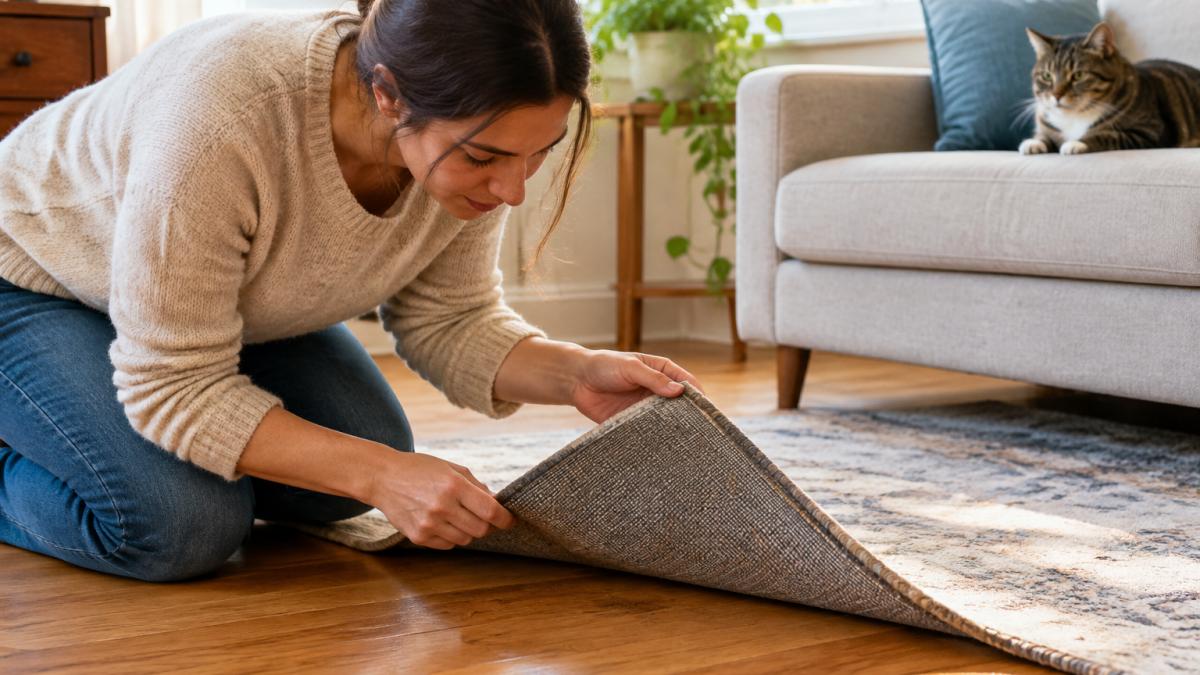
So before you look at color or pattern, flip the rug over and read the construction. If the label says "looped," "hooked," or "shag," keep walking.
Best Rugs for Cats Who Scratch: Materials That Take Claws
The best rugs for cats who scratch are made from dense synthetic fibers, especially polypropylene and tightly woven polyester. These fibers resist pulling and clean up fast. Natural fibers like sisal and jute are tough, but their coarse weave can invite scratching and hold onto debris.
A quick comparison of common materials:
| Material | Scratch resistance | Washability | Best for |
|---|---|---|---|
| Polypropylene | High | High | Busy homes, heavy scratching |
| Polyester | Medium-high | High | Soft feel plus easy cleaning |
| Acrylic | Medium | Medium | Budget-friendly low-pile styles |
| Sisal / jute | Medium | Low | Low-traffic, decorative spots |
| Wool | Medium | Low | Warmth, not heavy claw use |
A common mistake is buying a beautiful natural-fiber rug for a cat that loves to dig. It rarely ends well.
Here is the practical fix: give your cat a better target. A dedicated scratching outlet redirects claws away from the new rug. We carry a cat tree tower with indoor scratching posts and a cat climbing tower for indoor play and sleep, both of which give claws somewhere to go.


Best for: homes with one or more active scratchers. Skip if: your cat is a dedicated digger and you want a fragile natural-fiber showpiece.
How to Verify a Rug Is Genuinely Machine Washable
A rug is genuinely machine washable only if the care label names machine washing and the rug physically fits your machine. "Spot clean only" or "professional cleaning recommended" means it is not. This is the gap most buying guides skip, and it is where buyers get burned.
Start with the care label, because "washable" is not a regulated term. Look for explicit language: "machine wash cold," "tumble dry low," or "line dry." A label that says "spot clean" or "professional cleaning" is telling you the manufacturer does not expect the whole rug to survive a wash cycle.
Next, measure before you commit. A rug needs room to move inside the drum; packing it tight stresses the backing and prevents water and detergent from circulating. As a working rule, a rug should fit with several inches of clearance on all sides of the drum, and front-load machines generally handle larger pieces than top-loaders with an agitator.
Then check the backing and trim. A backing that is glued, stiffened, or embellished can crack, peel, or delaminate in the wash. Rubber or thermoplastic non-slip backings usually survive cold washing; glued-on fringe, tassels, and appliqués often do not.
Watch out: a rug labeled "washable" that requires a commercial-size machine is not washable for most apartments. Check the size against your drum first, not after delivery.
Finally, understand the two common washable systems. One-piece rugs go into the machine whole, which is simple but means the entire rug, backing included, takes the wear of every wash. Cover-and-pad systems pair a thin, machine-washable cover with a separate pad; you wash only the cover, which dries faster and is cheaper to replace, but the cover can shift and the pad itself still needs occasional cleaning.
Cat-Friendly Rugs for Living Room Layouts and Sizes
Cat-friendly rugs for a living room come down to size and placement as much as material. A rug should anchor your seating, leave a border of bare floor, and sit where your cat actually spends time. Get the size right and the rug stays put instead of bunching under zooming paws.
Measure first, then match the rug to the room:
- Seating zone: front legs of sofas and chairs on the rug
- Walkways: leave a clear path so cats do not skid on edges
- Under litter areas: choose a washable mat, not the main rug
- High-sun spots: pick fade-resistant synthetics
For apartment layouts, a low-pile rug in a mid-size rectangle usually works best. It is light enough to move for cleaning and big enough to define the space. You can browse living room rug options that fit common apartment dimensions.
Pro tip: add a grippy pad underneath. A rug that slides is a rug your cat will surf across at 2 a.m.
Best Rugs for Pets and High Traffic: Durability Where It Counts
The best rugs for pets and high traffic combine dense fibers, a sturdy backing, and stain resistance. Durability in a cat household is really about two things: how the fibers handle claws, and how the rug handles repeated washing. A pretty rug that sheds or pills after three washes is a false economy.
What to look for:
- Dense, tight weave that resists pulling
- Stain-resistant treatment for spills and accidents
- Reinforced edges that will not fray
- Colorfast dyes that survive washing
- A backing that grips the floor
Where most guides fall short is wear resistance over time. Vacuum a low-pile rug weekly to lift grit. Grit acts like sandpaper under paws and breaks fibers down faster. Rotate the rug now and then so traffic wear spreads evenly.
Synthetic fibers generally outlast natural ones in busy homes. They also dry faster, which matters when accidents happen.
Best Washable Rugs for Pets: Fur, Dander, and Accident Cleanup
The best washable rugs for pets make fur removal and accident cleanup quick and repeatable. That means a low-pile surface you can vacuum easily, a backing that survives washing, and fibers that release hair instead of gripping it. Easy cleaning is the whole point, but the details of how you clean matter as much as the rug you buy.
For routine fur and dander, vacuum two to three times a week with a brushless or low-pile setting; a beater bar can fray low-pile synthetics over time. A rubber squeegee or damp rubber glove lifts embedded hair from tight weaves better than suction alone. Wash frequency depends on your cat, but most homes do well with a wash every few weeks, and keeping a spare mat means one is always clean.
For accidents, speed and sequence decide whether odor lingers. Blot, never rub, with a clean cloth to lift as much liquid as possible. Then apply an enzyme cleaner that breaks down uric acid rather than masking it with fragrance; ordinary detergent and vinegar do not neutralize the compounds cats can smell. Let the enzyme product dwell per its label, blot again, and rinse lightly.
Watch out: if urine soaks through to the rug pad or floor, cleaning only the rug will not remove the smell. Treat the pad and floor separately, and replace a pad that has absorbed odor rather than trying to launder it.
To prevent odor from reaching the floor in the first place, use a moisture-resistant pad or a waterproof liner under high-risk spots, and keep a washable mat under litter areas rather than relying on the main rug. For cats that mark or have frequent accidents, a cover-and-pad system lets you wash only the soiled cover and replace it cheaply if odor persists.
If you move cats around the home, a portable pet travel stroller keeps fur and accidents contained during the trip. Less mess on the rug, less cleanup after.

Rug Pads, Backing, and Floor Protection
A rug pad protects your floor and your rug, and it keeps the whole thing from sliding. It also adds a layer of cushion that helps the rug last longer under claws and traffic. This is the cheapest upgrade you can make, and most people skip it.
What a good pad does:
- Grips so the rug stays flat
- Cushions to reduce fiber stress
- Protects hard floors from scratches and dye transfer
- Adds slip resistance on smooth surfaces
Match the pad to the floor. Use a felt-and-rubber pad on hardwood, and a rubber grip pad on tile. Trim the pad slightly smaller than the rug so edges lie flat.
Watch out: a waterproof backing keeps spills off your floor, but it can trap moisture if the rug gets soaked. Dry the rug fully before putting it back down.
Pick Your Cat-Proof Washable Rug at Velo Shop X
Choosing a cat-proof rug is not complicated once you know the specs. Low pile, loop-free construction, dense synthetic fibers, and a label that truly says machine washable. Add a grippy pad and a dedicated scratching outlet, and you have solved most of the problem.
At Velo Shop X, we curate home and pet essentials with exactly this in mind. Our carefully selected quality products bring comfort and function to every room, and our simple, secure checkout makes it easy to order with confidence. If you are setting up a first apartment or upgrading a busy living room, we are here to help you pick right the first time.
Get started with Velo Shop X and build a home that works for you and your cat.
Frequently Asked Questions
What type of rug is best with cats?
Low-pile, loop-free rugs in synthetic fibers such as polypropylene or polyester hold up best with cats. Tight, short fibers give claws less to catch on, and synthetic yarns resist stains and moisture better than natural fibers like sisal or wool. Flatweave and low-pile constructions also vacuum easily, so fur and dander come up in one pass instead of matting into the pile. Pair the rug with a pad to stop slipping and add cushioning.
Are low-pile rugs better for cats?
Yes, for most homes with cats. Low-pile rugs resist claw snagging because there is less yarn height for a claw to hook into, and they release fur and dander with a quick vacuum. High-pile and shag rugs trap litter, hair, and dander deep in the fibers, and a cat's claws can pull loops loose. If you want softness underfoot, choose a medium pile with a tight weave rather than a long, loose shag.
How can I keep my cat from scratching a rug?
Give your cat a better target. Place a scratching post or cardboard scratcher next to the rug's edge and reward your cat for using it. Choose a loop-free, low-pile rug so any scratching does less damage, and rotate the rug occasionally so wear spreads out. Trim your cat's nails every couple of weeks, and use a rug pad to keep the rug from shifting when your cat launches off it.
What should I look for in a pet-friendly rug?
Check four things: fiber, pile height, backing, and wash instructions. Synthetic fibers such as polypropylene and polyester handle spills and accidents better than natural fibers. Low pile and loop-free construction resist claw snagging. A water-resistant backing protects your floor, and a rug pad adds grip. Confirm the care label lists machine washing and the maximum load size, since a rug that fits your machine is far easier to keep clean.
