

Pet Stroller for Senior Dogs: A 2026 Guide
Table of Contents
- Why Senior Dogs Need Strollers: Mobility and Comfort
- Choosing the Right Stroller: Size, Weight Capacity, and Fit
- Dog Stroller for Mobility Issues: Support and Accessibility
- Dog Stroller for Large Dogs: Weight Capacity and Stability
- How to Train a Dog to Ride in a Stroller: Step-by-Step
- Dog Stroller for Hiking: Terrain, Wheels, and Durability
- Key Features That Matter: Comfort, Safety, and Maintenance
- Frequently Asked Questions
Last Updated: October 22, 2026
Why Senior Dogs Need Strollers: Mobility and Comfort
A pet stroller for senior dogs supports aging pets whose mobility is declining.

A stroller also delivers mental stimulation, fresh air, and social interaction when walking on their own legs isn't an option.
Many pet owners wait too long to consider a stroller. According to veterinary research on aging dogs, senior dogs often experience mobility issues that benefit from supportive aids like strollers.
At Velo Shop X, our curated selection includes options designed for aging dogs, combining practical functionality with modern aesthetics that fit apartment living.
Choosing the Right Stroller: Size, Weight Capacity, and Fit
Match the stroller to your dog's actual measurements, not breed or approximate weight. For senior dogs, fit determines whether they can enter, turn around, and lie down without strain.
Measure Your Dog Before You Shop
Weight alone is a poor proxy, a long-bodied dachshund and a stocky bulldog can weigh the same yet need very different cabins. Measure your dog standing and lying down:
- Length: From the base of the tail to the tip of the nose (or chest, if the nose overhangs). Add 2-3 inches so your dog can turn and stretch.
- Height: From the floor to the top of the head (or ears, if erect). Add 2-3 inches for clearance when standing.
- Width: Across the widest part of the body (usually the shoulders or hips). Add 1-2 inches for comfortable lying down.
- Weight: Use a baby scale or vet scale for accuracy; household scales vary.
Compare these to the stroller's interior cabin dimensions, not the exterior footprint. Weight capacity is a maximum load rating, not a guarantee of comfortable space, a 50-pound-rated stroller may have a cabin too short for a long-bodied 35-pound dog.
Small Dogs and Cats
Small dogs under 15 pounds have the most stroller options, since lighter pets need less structural support. For senior small dogs, the critical dimension is entry height, the distance from the ground to the cabin floor.
The Foldable Pet Stroller for Small Dogs and Cats from Velo Shop X features a roomy enclosed cabin with breathable mesh, a 3-wheel design that rolls smoothly on everyday terrain, and rear brakes for stability when you stop.
A storage basket, cup holder, and foldable design add practical value.
Medium and Large Dogs
Stability becomes critical with larger dogs, since a heavier load shifts the center of gravity on slopes. Wider wheelbases and lower centers of gravity help. Before committing, load the stroller with your dog's equivalent weight and check that the frame does not flex excessively when you press the handle.
Senior-Specific Fit Checks
For an aging dog, fit is about more than dimensions. Check these before you buy:
- Entry height and step-over: Can your dog walk in with minimal lift, or will you need to lift them? Measure the step-over height and compare it to your dog's comfortable step.
- Door width: A narrow opening forces your dog to squeeze through, which is painful for arthritic hips.
- Interior floor: Is it flat and padded, or does it have ridges and seams that pressure joints?
- Harness attachment points: Are there secure points to clip a harness so your dog cannot jump or fall out during turns?
- Brake reach and strength: Can you engage the brakes easily while holding the handle?
A stroller that passes these checks gets used consistently, and consistency keeps a senior dog getting out.
Dog Stroller for Mobility Issues: Support and Accessibility
Entry height is the key feature.
Harness attachment points matter for dogs with balance issues: gentle restraint prevents falls during turns or stops without restricting natural movement.
Cushioning provides comfort for dogs with joint pain. Thin, hard floors amplify vibration and impact, so quality strollers include padded bases that absorb shock from uneven ground.
Ventilation prevents overheating, especially for senior dogs with compromised temperature regulation; breathable mesh panels allow airflow without exposing your pet to direct wind or rain.
Dog Stroller for Large Dogs: Weight Capacity and Stability
Large dogs demand higher specifications for weight distribution, structural integrity, and wheel durability. For senior large dogs the stakes are higher: a stroller that tips or fails under load can injure a dog who cannot easily catch themselves.
Weight Capacity Is a Starting Point, Not a Guarantee
Strollers loaded near maximum capacity flex more on uneven ground, transmitting sway to the dog. If your dog is close to the limit, step up to the next capacity tier even if the cabin seems larger than needed.
Stability: What Actually Keeps a Large Dog Safe
- Wheelbase and track width: A wider distance between left and right wheels resists tipping on side slopes.
- Center of gravity: A cabin mounted low between the wheels is more stable than one perched high above them.
- Frame stiffness: A frame that flexes under load shifts weight unpredictably. Press down firmly on the handle with the stroller loaded; if the frame twists or the wheels splay outward, it will be harder to control.
- Brake strength: A single rear brake works for small dogs on flat ground, but larger dogs on inclines need dual brakes or locking mechanisms that hold the full loaded weight. Test the brakes on a slope with your dog's equivalent weight before relying on them.
Wheels and Terrain
Wheel size matters more than tread pattern for senior dogs: larger wheels roll over obstacles with less jolt. For gravel and uneven paths, roughly 8 inches or more is a common threshold where the ride becomes noticeably smoother. Suspension reduces impact further but adds weight and complexity; for mostly pavement use, good pneumatic tires often suffice.
Safe Loading and Restraint
- A low entry or ramp: A fold-down side or a short ramp reduces the lift required. Check the ramp's slope and surface grip; a steep or slick ramp defeats the purpose.
- Harness attachment points: Clip your dog's harness to an interior attachment point so they cannot jump or fall out during turns or sudden stops. Avoid attaching to the collar.
- Ventilation and visibility: Mesh panels on multiple sides allow airflow and let your dog see out, which reduces anxiety. In warm weather, poor ventilation turns a stroller into an oven within minutes.
Frame Materials and Trade-Offs
Aluminum offers lightness with reasonable strength; steel provides maximum durability but adds weight, and some premium models use hybrids. For a large senior dog, prioritize stiffness and brake strength over light weight, a flexy frame is a safety liability.
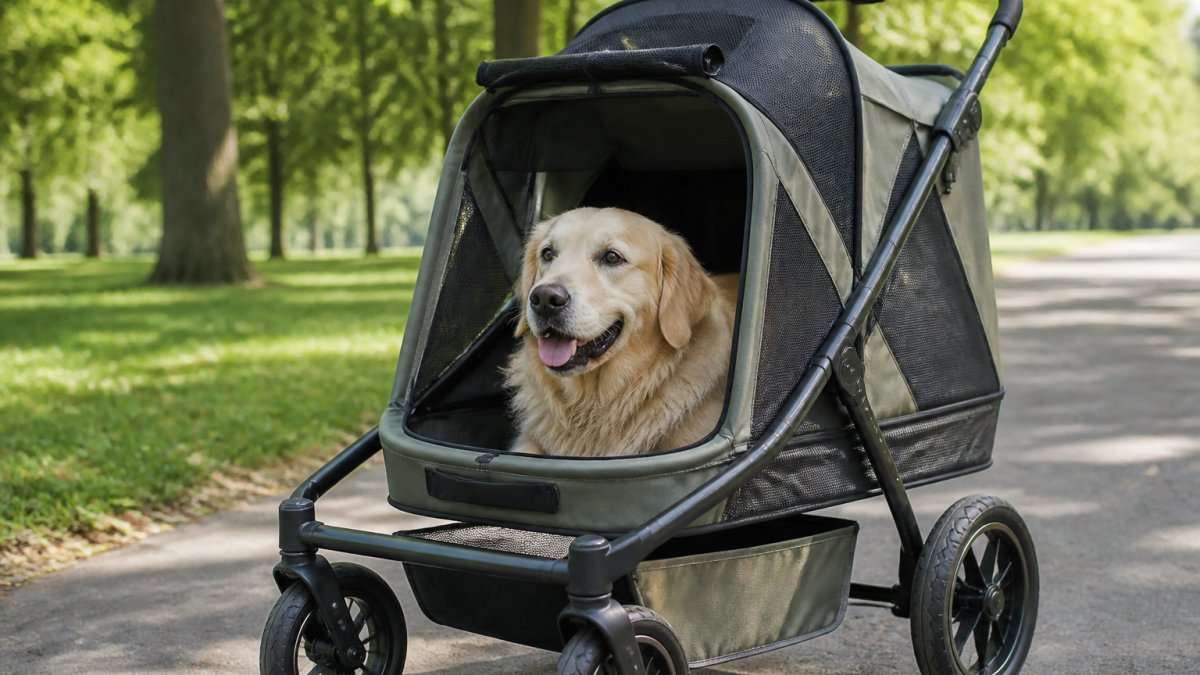
How to Train a Dog to Ride in a Stroller: Step-by-Step
Many senior dogs have never ridden in a stroller. The enclosed space, movement, and unfamiliar sensations can feel threatening. Patient training transforms resistance into acceptance.
Getting Started: Familiarization
Start with the stroller stationary at home. Leave it open with treats inside and let your dog explore at their own pace, positive association removes the stroller's strangeness.
Spend several days here until your dog voluntarily enters and exits without hesitation, rewarding every approach, sniff, and step inside.
Once your dog enters freely, close the canopy briefly while they're inside with treats. Gradually extend the time with the canopy closed. This builds comfort with the enclosed feeling.
Building Confidence: Short Trips
The first actual ride should be very short, around your home or a quiet street, under five minutes. First impressions matter.
Walk slowly and smoothly on flat, familiar routes; sudden movements, sharp turns, or bumpy terrain reinforce nervousness.
Reward calm behavior with high-value treats.
Foldable Pet Stroller for Small Dogs and Cats →
Gradually extend ride duration and distance. After several successful short trips, venture to busier areas or slightly longer routes. Build confidence incrementally.
Common Training Mistakes to Avoid
The biggest mistake is moving too fast.
Don't use the stroller as punishment, putting anxious dogs in to control them creates negative associations training cannot overcome.
Avoid forcing your dog inside if they're genuinely frightened. Respect their pace. Some senior dogs take longer to adjust, and that's normal.
Don't assume your dog will never accept the stroller. Even older dogs can learn to enjoy rides when training is patient and consistent.
Dog Stroller for Hiking: Terrain, Wheels, and Durability
Senior dogs that enjoyed hiking before mobility issues developed can still experience trails with the right stroller.
Wheel size and tread pattern determine off-road capability. Larger wheels roll over obstacles more easily.
Suspension systems reduce impact on bumpy terrain. A stroller with no suspension transmits every jolt to your dog.
Frame durability matters on trails. Lightweight frames save weight but may flex excessively under load on uneven ground.
Weather protection becomes more important on longer outings.
Test any hiking stroller on your actual terrain before committing.
Key Features That Matter: Comfort, Safety, and Maintenance
Beyond size and capacity, specific features determine whether a stroller truly improves your senior dog's quality of life.
Cushioning and Ventilation
A padded floor makes the difference between a comfortable ride and an uncomfortable one. Thin floors transmit vibration and impact directly to your dog's body.
Ventilation prevents heat buildup inside the enclosed cabin. Breathable mesh panels on sides and canopy allow airflow without exposing your dog to direct wind or rain.
Look for ventilation options you can adjust. Mesh panels that roll up or removable canopy sections let you increase airflow on warm days and seal it on cool days.
Brakes, Harness Attachment, and Weather Protection
Reliable brakes are non-negotiable for safety. Rear brakes work for flat ground and gentle slopes. Dual brakes or locking mechanisms provide security on steeper terrain.
Harness attachment points let you secure your dog inside the stroller, preventing falls during turns or sudden stops.
Weather protection includes both canopy coverage and material durability. A waterproof canopy shields your dog from rain. UV-blocking fabric protects from intense sun. Materials should resist fading and degradation from regular outdoor exposure.
Washable Covers and Long-Term Care
Removable, washable covers extend stroller life and maintain hygiene. Dogs shed, drool, and occasionally have accidents.
Check how easily covers remove and reattach. Some designs require tools or complex procedures. Others slip on and off in seconds.
Frame maintenance is minimal but important. Wipe down metal parts after beach or salty-air outings to prevent corrosion.
Tire maintenance depends on wheel type. Pneumatic wheels need occasional air checks, low pressure reduces rolling efficiency.
Choosing the right stroller transforms your senior dog's final years.
Frequently Asked Questions
What should I look for in a stroller for a senior dog with mobility issues?
Prioritize low entry points or ramps to reduce strain on aging joints, adequate cushioning for comfort on longer outings, and secure harness attachment for safety. Check that the interior space suits your dog's size and that the weight capacity exceeds your dog's actual weight by at least 10 pounds. Brakes are essential for stability on slopes. Look for water-resistant covers and washable liners to handle accidents or weather without damage.
How do I choose the right stroller size for my dog?
Measure your dog's length from nose to tail and height at the shoulder, then compare these dimensions to the stroller's interior cabin space. For small dogs and cats, a compact foldable stroller with breathable mesh works well for everyday outings. Larger or longer-bodied dogs need strollers with roomier cabins and higher weight capacities. Always verify the pound capacity listed, it should comfortably support your dog's weight plus room for movement.
How to train a dog to ride in a stroller?
Start by letting your dog explore the stationary stroller indoors, offering treats and praise. Once comfortable, place your dog inside for short periods at home. Take the stroller on brief, quiet walks before progressing to busier environments. Keep initial trips under 10 minutes to build confidence. Use a harness attachment for safety, and reward calm behavior. Most dogs adapt within 2-3 weeks of consistent, positive exposure.
Are dog strollers suitable for large senior dogs?
Strollers can benefit senior dogs whose mobility is compromised by arthritis or heart disease. Ensure the stroller has sturdy wheels, reliable brakes, and a stable frame to safely support the load. Check that entry access is low and easy to minimize strain on your dog's joints during loading.