

Are Smart Kitchen Tools for 2026 Worth Buying?
Last Updated: November 1, 2026
Quick Summary
The best smart kitchen tools for 2026 are devices that use sensors and software to take over a decision you would otherwise make manually, such as holding a temperature, weighing to a fraction of a gram, or running a cooking cycle while you do something else. We would buy a precise digital scale first, then add appliances only when a meal you cook often demands one.
- A smart kitchen tool uses sensors and software to take over a manual decision; everything else is marketing.
- We group these tools into three tiers: digital, assisted, and connected, with connected carrying the most cost and risk.
- The LCD Digital Kitchen Scale measures up to 500 g with 0.1 g resolution and powers off after 5 minutes.
- Before buying a connected appliance, confirm its Wi-Fi band, offline operation, and published software-support period.
- A starter kit should not be connected: start with a precise digital scale, a stackable cutting board set, and a thermometer.
Table of Contents
- What Actually Makes a Kitchen Tool Smart in 2026
- Smart Kitchen Appliances: Where the Money Goes
- Smart Kitchen Scales and the Accuracy That Matters
- Best Kitchen Gadgets for Small Spaces
- Best Kitchen Gadgets for Home Cooks Who Cook Daily
- Privacy, Compatibility, and the Costs Nobody Quotes
- Build Your Starter Kit at Velo Shop X
- Frequently Asked Questions
What Actually Makes a Kitchen Tool Smart in 2026
Most kitchen gadgets sold as "smart" in 2026 are not smart at all. They are digital, which is a different thing.
A smart kitchen tool is a device that uses sensors and software to take over a decision you would otherwise make manually.
That definition matters because it splits the category cleanly. A scale with a precise sensor that locks a reading is smart in the way that counts.
Connected, Assisted, or Just Digital: Three Tiers to Know
We group these tools into three tiers, and the tier tells you what you are actually paying for.
- Digital: has a screen or a sensor but no automation. You still make every call. A basic LCD scale sits here.
- Assisted: does part of the thinking. It beeps at temperature, holds a reading, or converts units for you.
- Connected: talks to an app, updates, and may store data. This tier carries the most cost and the most risk.
The higher the tier, the more you should ask about software support before you buy. More on that below.
Smart Kitchen Appliances: Where the Money Goes
Smart kitchen appliances take the largest share of any kitchen budget, and they are also where buyers most often overspend.
Air fryers win on speed and on using less oil. Multi-function cookers win on hands-off time, since you can set a cycle and walk away. High-speed blenders win on texture, handling soups and sauces that a standard blender leaves lumpy.
How We Would Test an Appliance Before Recommending It
Here are the questions worth asking yourself before buying any smart appliance:
- Core-task performance first. Does the appliance do its one job well without the app? An air fryer should crisp; a multi-cooker should hold pressure and temperature; a blender should leave no lumps. If the app is the only thing that makes it work, that is a warning sign, not a feature.
- Manual fallback. Unplug the network and run a full cycle. If the appliance becomes a brick, its smart features are a dependency, not an enhancement.
- Setup friction. Time the first-run setup from unboxing to first cook. A device that needs an account, a firmware update, and a router restart before it will boil water is telling you something about daily use.
- Sensor honesty. Compare the appliance's reported temperature or weight against an independent thermometer or scale. A display that reads confidently but drifts is worse than no display.
Air Fryers, Multi-Function Cookers, and High-Speed Blenders
Pick by the meal you actually cook, not by the feature list.
- If most of your dinners are quick and crisp, an air fryer earns its counter space. Look for a basket that fits a whole meal for your household and a preheat time under a few minutes.
- If you batch cook or work late, a multi-function cooker saves more time overall. Pressure, slow-cook, and saute modes in one pot replace several devices.
- If you make sauces, soups, or smoothies daily, the blender is the one you will not regret. A high-speed motor matters more than a touchscreen.
A common mistake is buying a connected appliance before checking whether the app is still supported. Watch out: an appliance whose app stops updating can lose its main selling point overnight, leaving you with a device that only works manually. That is the total-cost-of-ownership trap, the sticker price is only the first payment.
Compatibility and Ecosystem Checks
Smart appliances rarely live alone. Before you buy, check whether the device works with the voice assistant and phone platform you already use, whether it needs a hub, and whether it can be controlled from more than one account in the household. A shared kitchen needs shared controls; a device tied to one person's login is a friction point every day.
Smart Kitchen Scales and the Accuracy That Matters
Smart kitchen scales are the least glamorous tool in this category and the one we would buy first. Our LCD Digital Kitchen Scale shows the features to look for in a precise scale.

The LCD Digital Kitchen Scale in our range features a wide LCD screen, a tare function to zero out a container, and a hold function that locks the reading once the weight settles.
Best Kitchen Gadgets for Small Spaces
The best kitchen gadgets for small spaces are the ones that do two jobs in one footprint. Counter space is the real constraint in a first apartment, and a tool that only does one thing has to justify the room it takes.
A bamboo cutting board set is a good example of how to think about this. Bamboo cutting boards are a practical choice for compact kitchens.
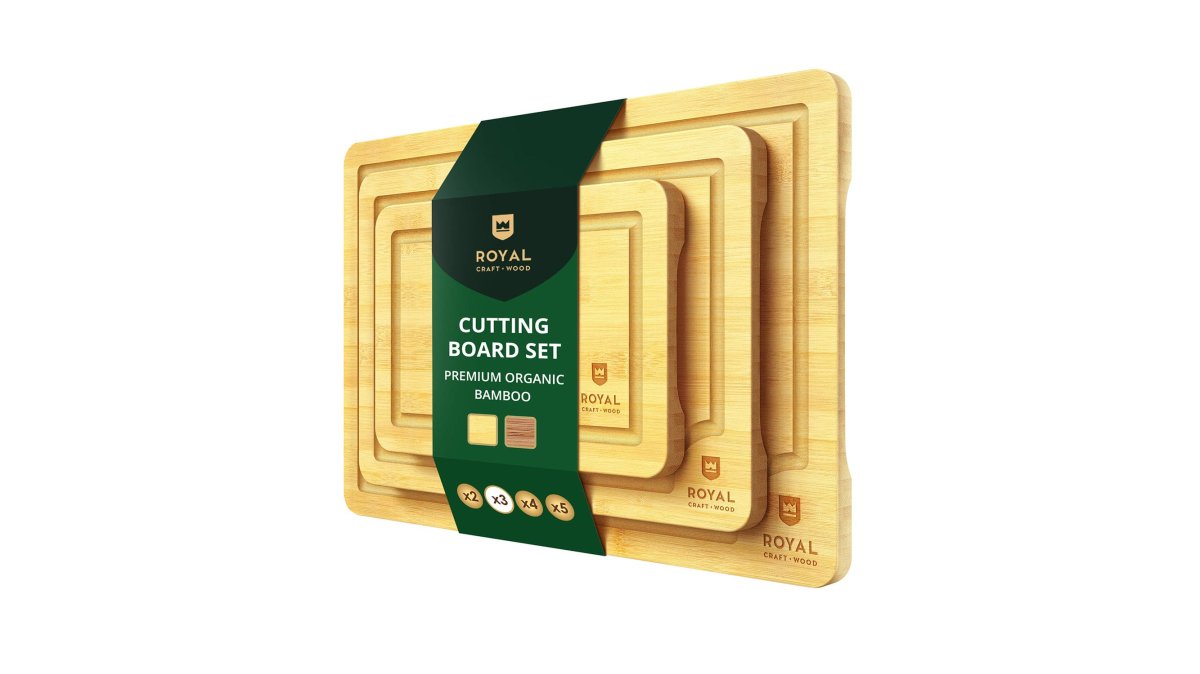
Stackable, nestable, and multi-function tools beat single-purpose gadgets every time in a small kitchen. If you want the fuller list of space-saving picks, our guide to the best kitchen gadgets for small spaces covers the rest.

Best Kitchen Gadgets for Home Cooks Who Cook Daily
For home cooks who cook most days, the best kitchen gadgets are the ones that reduce friction in a routine you already repeat. Daily cooking rewards speed and consistency, not novelty. That is a different test from the one used in most roundups, which rank gadgets by feature list. The tools that survive daily use are the ones you reach for without thinking.
The Daily-Cook Test: What We Would Measure
Rather than rank by brand, we would score each gadget on criteria a daily cook can actually feel:
- Repeatability. Does the tool give the same result twice? A thermometer that reads the same doneness on two identical chicken breasts, or a scale that locks the same weight for the same scoop of flour, passes. A tool that drifts fails.
- Setup and cleanup time. Count the seconds from drawer to counter and from counter to sink. A gadget that takes longer to clean than to use will stop being used.
- One-hand operation. Daily cooking is often one-handed, the other hand is holding a pan or a phone. Buttons, dials, and lids that work with one hand earn their place.
- Readability. Can you read the display at arm's length, in a dim kitchen, without glasses? Backlit, high-contrast displays matter more than app connectivity for most people.
The Gadgets That Pass
A digital scale earns its place for the same reason: repeatable results. The LCD Digital Kitchen Scale reads to 0.1 g and holds a reading once the weight is stable.
The Cutting Board Set of 3, Bamboo is a practical third staple for everyday prep.
Accessibility and Usability for Every Cook
A daily-cook gadget should work for the whole household, not just the person who set it up. Before buying, check whether the controls are physical buttons or a touchscreen, whether the display is readable in low light, and whether the device offers voice control or app control for someone with limited mobility or vision.
If you want the fuller list of space-saving picks, our guide to the best kitchen gadgets for small spaces covers the rest.
Privacy, Compatibility, and the Costs Nobody Quotes
The costs nobody quotes on smart kitchen tools are software, privacy, and replacement. The sticker price is the smallest part of ownership for anything connected.
Privacy deserves a straight answer. A connected appliance with a microphone or a camera collects data, and the terms of service decide what happens to it.
Compatibility is the second hidden cost. Ecosystems change, and an appliance tied to one platform can become an orphan when that platform shifts.
Long-term value comes down to repairability and support windows. If you are weighing whether a cheaper item will hold up, our guide on how to tell if affordable home goods will last walks through what to check.
| Hidden Cost | What It Looks Like | How to Check Before Buying |
|---|---|---|
| Software support | App stops updating, features vanish | Look for a published support period |
| Privacy | Data collection via app or mic | Read the privacy terms first |
| Compatibility | Locked to one ecosystem | Confirm manual operation works |
| Replacement | Sealed battery, no spare parts | Check for user-replaceable parts |
Build Your Starter Kit at Velo Shop X
A starter kit does not need to be expensive, and it should not be connected. Start with the tools that remove the most guesswork: a precise digital scale, a stackable cutting board set, and a thermometer if you cook meat regularly.
Velo Shop X offers kitchen essentials at competitive prices with a simple, secure shopping experience. You can browse the range and see how the pieces fit together before you commit.
Frequently Asked Questions
Which smart kitchen gadgets are actually worth buying?
The ones you will use at least weekly and that solve a real measurement or timing problem. An instant-read thermometer, a digital scale, and a multi-function cooker cover most everyday cooking. App control and voice commands are only worth paying for if you will genuinely use them. Before buying, ask whether the tool still works when the app does not, and check that replacement parts and software updates are available.
Are smart kitchen appliances worth the cost?
It depends on how often you cook and what you replace. A multi-function cooker or air fryer can replace two or three single-purpose appliances, which saves counter space as well as money. Add up the purchase price plus any filters, pods, or subscription features over three years. If the total is higher than the separate tools it replaces, the smart version has to earn its place through convenience you will actually use.
What should I look for when buying a smart kitchen gadget?
Start with accuracy and build quality, then check the smart layer. For scales, look for 0.1 g resolution and a tare function. For thermometers, check the response time and stated temperature accuracy. Then confirm compatibility with your phone or hub, read the privacy policy, and check how long the maker promises software support. A durable tool with modest smart features beats a connected gadget that breaks in a year.
Can smart kitchen tools help reduce food waste?
They can, mainly through better measurement and storage. A digital scale lets you weigh exact portions instead of guessing, and a thermometer helps you cook meat to the right temperature the first time rather than overcooking and discarding it. App-connected appliances that suggest portion sizes can help too, but the biggest gains come from using what you already have consistently rather than buying more gadgets.
The challenge with smart kitchen tools is separating real function from a label. Start with accuracy and durability, add connectivity only when it solves a problem you actually have, and check software support before you pay for it. Velo Shop X stocks carefully selected kitchen essentials with competitive pricing and a secure checkout, so you can build a kit that earns its counter space. Get started with Velo Shop X and equip your kitchen with tools that hold up to daily use.
