

How to Tell If Affordable Home Goods Will Last
Quick Summary
Affordable home goods can be durable, but a low price alone does not tell you how long they will last. Check the material for the room it will live in, inspect joints, hardware and finishes, and read the listed specs before you buy.
- Match the material to the room, since moisture and load determine how long a piece lasts.
- Push on furniture before buying; rocking or creaking joints tend to get worse over time.
- Check that engineered wood has sealed or banded edges, since exposed edges fail first.
- Tighten screws monthly and replace worn felt pads seasonally to prevent loosening.
- Compare items by cost-per-use: price divided by uses per year times expected years.
Table of Contents
- Are Affordable Home Goods Durable? What the Evidence Shows
- How to Tell If Furniture Is Good Quality
- Best Materials for Durable Furniture and Home Goods
- How to Make Inexpensive Furniture Last
- Cost-per-Use: Judging Value Over Time
- Maintenance, Repairs and Common Mistakes That Shorten Lifespan
- Choosing Affordable Pieces That Will Hold Up in Your First Apartment
- Frequently Asked Questions
Are Affordable Home Goods Durable? What the Evidence Shows
Last Updated: October 29, 2026
Affordable home goods can be durable, but the price tag alone won't tell you.
The available research on this question is thin. Most sources on the 2026 home goods market describe how much people spend and where they shop, not how long products hold up.
So this guide focuses on what you can verify in a store or on a product page: joints, hardware, finishes, specs, and care needs.
How to Tell If Furniture Is Good Quality
Quality shows up in a few places. Start with what you can physically inspect.
- Joints: Look for solid connections, not just staples or thin glue lines.
- Hardware: Screws and fittings should feel firm, not wobbly or cheap.
- Surfaces: Finishes should be even, with no bubbling or peeling edges.
Checking joints, hardware and finishes
Push on the piece. If it rocks, creaks, or shifts, expect that to get worse. Check corners and drawer runners too, since they take the most stress.
Finishes tell a story as well. A smooth, consistent coat usually means more care went into the process. Peeling or uneven spots often show up fast with daily use.
Reading labels and specs before you buy
Product specs are your best friend. Look for weight limits, materials, and dimensions. A shelf rated for 10 pounds will sag under heavy books. Match the spec to your real use.
Read care instructions too. A piece that needs hand washing or special cleaners may not suit a busy first apartment.
Best Materials for Durable Furniture and Home Goods
Material choice drives lifespan more than almost anything else, but "solid wood good, particleboard bad" is too simple. Durability depends on how a material handles moisture, load, and abrasion in the specific room where it lives. Here is how the common affordable materials actually behave.
Solid wood
Solid wood is strong, repairable, and can be sanded and refinished when it scratches. Its weakness is moisture: wood expands and contracts with humidity, so a solid-wood table in a steamy bathroom or an unheated porch can warp or crack. Look for kiln-dried wood (a drying process that reduces internal moisture) and avoid pieces where the grain runs in conflicting directions across a glued panel, that is a recipe for splitting.
Engineered wood (MDF, particleboard, plywood)
Engineered wood is often more dimensionally stable than solid wood because the fibers are reconstituted, but the binder and edge sealing determine whether it lasts. MDF and particleboard swell permanently when water reaches the raw core, so any exposed edge near a sink or floor is a failure point. Plywood, made of crossed veneer layers, resists warping better than particleboard and holds screws more reliably. When shopping affordable pieces, check that edges are banded or sealed and that the underside of a tabletop is finished, not raw.
Bamboo
Bamboo is a grass, not a wood, and it is hard and fast-growing. Strand-woven bamboo (fibers compressed with adhesive) is denser and more water-resistant than cheap strip bamboo, which can delaminate. Our Cutting Board Set of 3, Bamboo is a good example of a sturdy kitchen material at a modest price, but even good bamboo needs oiling to keep it from drying and cracking.
Metal
Steel and aluminum are tough and long-lasting when coated well. Powder coating is more chip-resistant than paint, and stainless steel resists rust better than mild steel. The weak points are welds and joints: a wobbly welded leg or a screw threaded into thin tubular metal will loosen over time. Look for gussets or reinforced brackets at stress points.
Plastic
Plastic is lightweight and cheap, but its durability varies enormously. Polypropylene and ABS are tougher than polystyrene, which cracks easily. UV exposure makes most plastics brittle, so plastic outdoor furniture degrades faster than indoor pieces. Plastic is a reasonable choice for light-duty storage or kids' items, less so for load-bearing shelves.
What the material label will not tell you
A material name alone does not predict lifespan. Two particleboard bookshelves can differ by years depending on edge sealing, hardware quality, and how the load is distributed. The practical move is to combine the material with the construction checks above: sealed edges, firm joints, and hardware rated for the load you plan to put on it.
How to Make Inexpensive Furniture Last
Most affordable furniture does not fail because it was cheap, it fails because small, fixable problems are ignored until they become structural. A maintenance routine and a few basic repairs can add years to a low-cost piece. This is the part most buying guides skip, and it is where you get the most value for the least money.
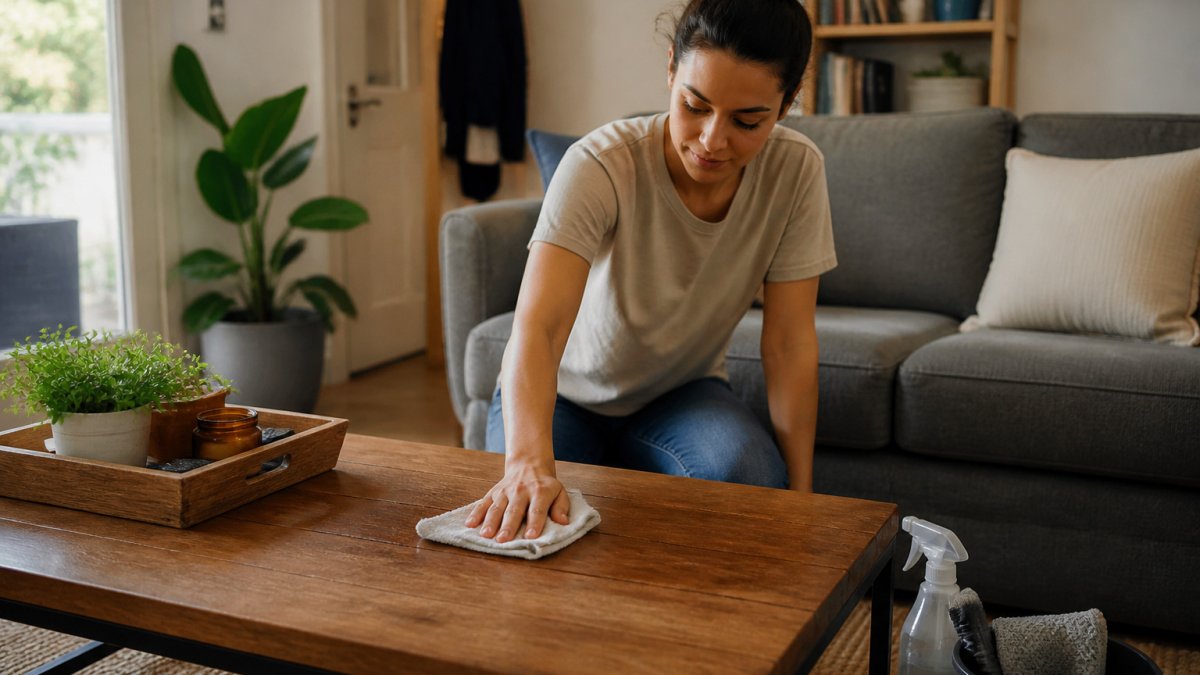
A simple maintenance schedule
- Monthly: Tighten screws and bolts on chairs, tables, and shelving. Wood and engineered wood compress slightly over time, so fasteners loosen. A loose joint concentrates stress and eventually strips the screw hole.
- Seasonally: Check felt pads under legs and replace worn ones. Wobbly furniture scratches floors and stresses joints.
- Twice a year: Oil wooden cutting boards and butcher block with food-safe mineral oil. Dry wood cracks; oiled wood flexes.
- After any spill: Blot, do not wipe, water on wood or laminate, and dry the area immediately. Standing water is the single fastest way to ruin engineered wood.
Repairs you can do yourself
- Stripped screw holes: Remove the screw, pack the hole with wooden toothpicks or a golf tee dipped in wood glue, let it cure, then re-drive the screw. This restores grip in particleboard and solid wood alike.
- Wobbly chair or table legs: Tighten the leg bracket first. If the leg still moves, add a thin shim or a corner brace. Do not overtighten, it can crack engineered wood.
- Small chips and scratches: Touch up with matching paint or a wax repair stick. Sealing the chip prevents moisture from reaching the core, which is what causes swelling and peeling.
- Loose drawer runners: Vacuum the track, then rub a dry bar of soap or paraffin along the runner to reduce friction. Replace worn plastic rollers rather than forcing a sticky drawer.
- Peeling edge banding: Re-glue with contact cement and clamp or tape until set. Exposed edges are where engineered wood fails first.
Habits that shorten lifespan
- Overloading shelves past their rated weight causes sag that never recovers.
- Harsh cleaners (bleach, ammonia, abrasive pads) strip finishes and coatings.
- Leaving wet items on wood, metal, or laminate invites swelling, rust, and staining.
- Dragging furniture instead of lifting it stresses joints and legs.
- Skipping cookware seasoning leads to rust and sticking, which shortens pan life.
When repair stops making sense
Repair is usually worth it when the fix costs less than a third of replacement and the piece is structurally sound. If the frame is cracked, the core is swollen from water damage, or the hardware has torn out of the material, replacement is the better call. The goal is not to keep everything forever, it is to avoid replacing a piece that only needed a ten-minute fix.
Cost-per-Use: Judging Value Over Time
The cheapest item is not always the best deal. A better way to judge value is cost-per-use.
Divide the price by how many times you'll use the item. A frying pan that costs $109 and gets used 300 times over several years works out to about 36 cents per use. A cheaper pan that wears out sooner and has to be replaced costs more per use over the same period.
Here is a simple way to apply this:
- Price: What you pay today.
- Uses per year: How often you'll use it.
- Expected years of use: How long you realistically expect it to last.
- Cost per use: Price ÷ (uses per year × years).
The article suggests comparing items by cost-per-use, using these inputs.
| Input | What it means | How to use it |
|---|---|---|
| Price | What you pay today | Starting cost of the item |
| Uses per year | How often you'll use it | Estimate realistic yearly use |
| Expected years of use | How long you expect it to last | Be realistic, not optimistic |
| Cost per use | Price ÷ (uses per year × years) | Lower number means better value |
Maintenance, Repairs and Common Mistakes That Shorten Lifespan
Most shortened lifespans come from avoidable habits, not bad products.
- Skipping seasoning or care instructions on cookware, which leads to rust or sticking.
- Using harsh cleaners that strip finishes or coatings.
- Overloading shelves that were built for light items.
- Leaving wet items sitting on wood or metal.
Repairs are often simpler than people expect. Tighten screws, reapply a thin coat of oil to wood, or touch up small chips with matching paint. Catching small problems early keeps them from becoming replacements.
Choosing Affordable Pieces That Will Hold Up in Your First Apartment
If you're furnishing your first place on a budget, start with the items you use every day. Storage, kitchen tools, and seating see the most wear, so they deserve the closest look.
Our guide to choosing durable home organizers walks through how to pick sturdy storage pieces for a small space. For the broader list of everyday items worth buying well, see what are the best apartment essentials for first timers. If you're weighing a daily-use kitchen piece, the LCD Digital Kitchen Scale is a compact tool with listed specifications.
Buy fewer, better pieces where wear is highest, and choose lighter, simpler items for the rest. Check the spec, inspect the joints, and do the cost-per-use math. That approach gives you affordable home goods that last.
Frequently Asked Questions
Are affordable home goods durable?
Some are and some are not, and price alone does not tell you which. Durability depends on the materials, how the piece is joined and finished, and how it is used and cared for. Look for solid or well-finished materials, reinforced joints, and clear specifications from the seller. Inspect pieces before buying where you can, and check the return policy for damaged items. Most affordable goods will last longer when you match them to the use and maintain them, rather than expecting a low price to guarantee a long life.
How can you tell if furniture is well made?
Start by checking the joints. Dowels, screws or corner blocks in the frame are usually stronger than thin staples or glue alone. Press on tabletops and shelves to see whether they flex, and check that drawers slide smoothly and close square. Look at the finish for even coverage and no peeling edges. Read the product listing for the materials used, since solid wood, metal and high-density materials generally outlast thin particleboard or laminate in heavy use.
What materials make home goods last longer?
Solid hardwood, metal frames, tempered glass and thick, dense plastics tend to hold up better than particleboard, thin laminate or lightweight veneers. Engineered wood can be durable when the core is dense and the edges are sealed, but it is more vulnerable to moisture. For kitchen items, a stainless steel or well-seasoned carbon steel pan will generally outlast a thin coated pan, though coated pans can still be long-lasting if they are used on low to medium heat and cleaned gently.
How can you make inexpensive furniture last longer?
Place it on a level surface, use felt pads under legs and avoid overloading shelves beyond their rated weight. Wipe spills promptly, keep pieces out of direct sun and damp areas, and tighten screws every few months. Use coasters, protective mats and gentle cleaners rather than abrasive products. Small repairs, such as replacing a loose hinge or re-gluing a joint early, prevent larger failures and extend the life of budget pieces considerably.
