

Durable Kitchen Sink Racks: How to Choose One That Lasts
Last Updated: November 13, 2026
Quick Summary
To choose a durable kitchen sink rack, check four things: a stated stainless steel grade such as 304, a bonded rather than sprayed coating, mechanically attached replaceable feet, and a measured fit inside the basin rather than the sink's outer rim. These construction details decide whether a kitchen sink rack lasts years or rusts at the welds within one.
- Measure the basin's interior length, width, and depth, not the sink's outer rim.
- 304 stainless steel resists corrosion best; lower grades like 201 rust more at scratches and welds.
- Bonded coatings resist chipping longer than sprayed or dipped coatings.
- Mechanically attached feet outlast glued feet because they can be replaced.
- Rinse and towel-dry the rack after acidic foods like lemon, vinegar, and tomato.
Table of Contents
- Why Most Sink Racks Fail Within a Year
- The Best Kitchen Sink Rack Material for Long-Term Use
- Sink Rack Size and Fit: Measure Before You Buy
- Sink Rack Rust Prevention: What Actually Works
- Over-the-Sink Dish Rack vs Bottom Grid: Which Do You Need?
- Drainage, Noise, and Sink Protection: The Details That Matter
- Cleaning and Care for Hard Water and Dishwasher Use
- Picking Your Sink Rack at Velo Shop X
- Frequently Asked Questions
Why Most Sink Racks Fail Within a Year
The typical kitchen sink rack fails for one boring reason: it was never built to sit in water. A rack spends its life wet, warm, and coated in soap film, and most buyers pick one on looks alone.
The failure modes are predictable. Wire grids bend at the joints where thin steel flexes under a full stockpot. Rubber feet peel off and leave bare metal resting on the basin floor.
Rack-specific durability rarely gets its own guidance, which is why so many shoppers repeat the same mistakes. If you want the deeper principles behind material and joint selection, our guide on how to choose durable home organizers covers the same decision framework for the rest of the house.
Watch out: buying a rack that matches your sink's outer width rather than its basin. It will not fit inside the basin.
The Best Kitchen Sink Rack Material for Long-Term Use
Stainless steel is widely regarded as a durable material for kitchen sink racks, because it resists corrosion, handles heat, and holds shape under weight. But "stainless steel" is not a single material, and the difference between a rack that lasts two years and one that lasts ten usually comes down to grade, wire thickness, weld quality, and how the coating is applied. Here is how the realistic options compare, and what to check on the label or in the product photos before you buy.
| Material | Corrosion Resistance | Heat Resistance | Weight Capacity | Typical Lifespan | Best For |
|---|---|---|---|---|---|
| 304 stainless steel, bare or coated | High | High | High | Longest | Daily heavy use |
| 201 or lower-grade stainless | Moderate | High | Medium | Moderate | Light use, budget racks |
| Silicone-coated steel | High | Medium | Medium | Moderate | Scratch-prone basins |
| Plastic | Low | Low | Low | Shortest | Light use, tight budgets |
Stainless Steel: Grade, Gauge, and Weld Quality Matter More Than the Label
Stainless steel earns its reputation, but the alloy grade decides how it behaves in a wet sink. 304 stainless (often called 18/8 for its chromium and nickel content) is the standard for kitchen equipment because the chromium forms a passive oxide layer that resists rust. Lower grades such as 201 use less nickel and more manganese, and they are more prone to surface rust at scratches and welds in constant wet conditions. If a listing does not state the grade, treat that as a warning sign rather than a neutral detail.
Wire thickness, usually expressed as gauge, controls stiffness. Thicker wire resists bending under a full stockpot, but very thick wire reduces the open area water needs to drain. A practical middle ground is a grid that feels rigid when you press the center with your thumb and still has gaps wide enough to see the basin floor through it. Welded joints should be smooth and fully fused; a weld that looks like a tack or has a visible gap will trap water and start corroding first.
Silicone and Plastic: Where They Win and Where They Break Down
Silicone wins on noise and basin protection. It will not scratch a fireclay or composite sink, and it dampens the clatter of dishes.
Plastic is a lower-cost option. Expect staining within months and cracking at the corners within a year or two of daily use.
Watch out: buying a rack described only as "stainless steel" without a grade, wire gauge, or coating method. That is the most common way shoppers end up with a rack that rusts at the welds within a year.
Sink Rack Size and Fit: Measure Before You Buy
Measure the inside of the basin, not the sink's outer rim. Take the interior length and width at the bottom, then subtract a small clearance so the rack drops in without wedging.
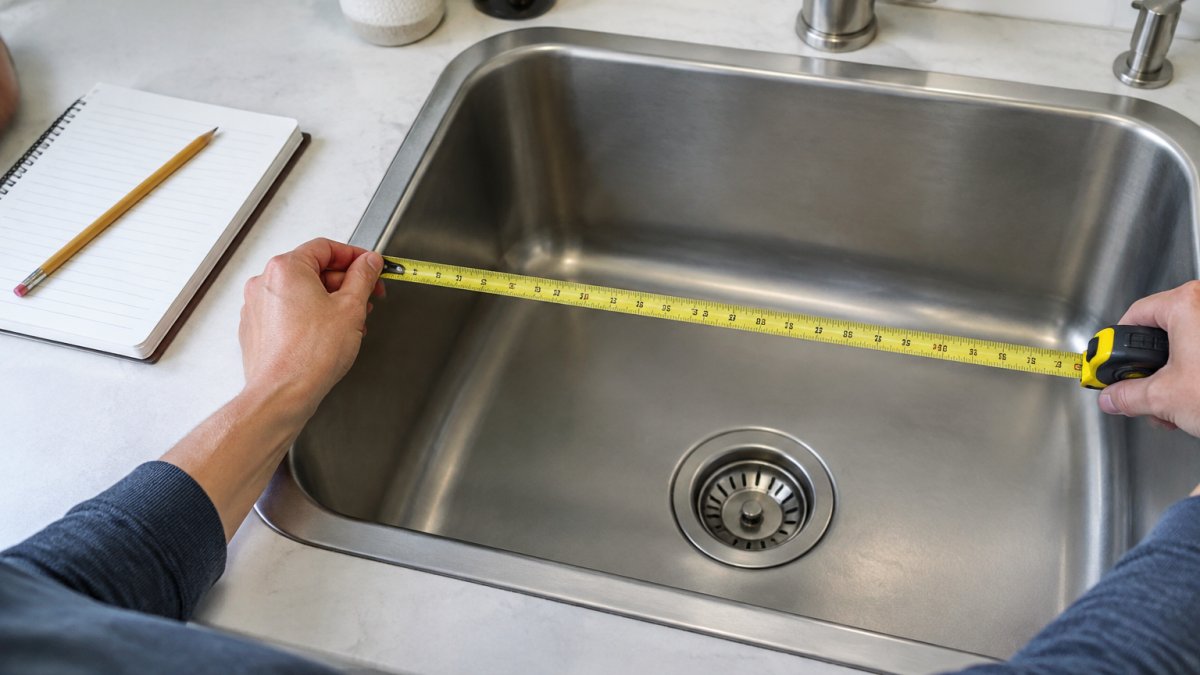
Three measurements decide the purchase:
- Interior length and width at the basin floor, not the rim
- Basin depth from floor to rim
- Drain position, since a centered drain and an offset drain need different grid cutouts
A common mistake is assuming a standard size exists. If you are fitting a rack into a compact kitchen, the small-space planning advice in our beginner's guide to practical home organization for small rooms helps you think through the layout before you order.
Sink Rack Rust Prevention: What Actually Works
Sink rack rust prevention starts with understanding how racks fail. Rust on a rack almost always begins at one of four points: a scratch through the coating, a weld, a loose or missing foot that traps water against the basin, or a cut end of wire where the protective layer was never continuous. Once corrosion starts at a joint, it spreads under the coating where you cannot see it, and by the time a brown stain appears on the basin floor the damage is usually well advanced.
The Four Failure Modes and How They Develop
Coating failure. Sprayed or dipped coatings chip at corners and along the top edges where pots and knives contact the wire.
Weld corrosion. Welds are where the steel's protective oxide layer is disrupted. A smooth, fully fused weld resists water; a porous or undercut weld holds moisture and begins to rust first.
Foot degradation. Rubber or silicone feet crack, harden, and eventually fall off.
Bar fatigue. Thin wire flexes under repeated load and eventually bends or breaks at the joint. A rack that visibly sags in the middle after a year of stockpots was undersized for the load, not abused.
A Rack-Specific Durability Checklist
Use this checklist when comparing racks, and again when inspecting one you already own:
- Frame construction: rigid when pressed at the center; no visible flex under hand pressure
- Welds: smooth, fully fused, no gaps or discoloration at the joints
- Coating: bonded rather than sprayed; continuous around corners and cut ends
- Feet: mechanically attached, replaceable, and still pliable rather than hardened
- Wire gauge: thick enough to resist bending but open enough to drain freely
- Replacement parts: manufacturer sells or specifies replacement feet and, ideally, the rack itself in standard sizes
What Actually Works, in Order of Impact
- Choose coated wire over bare wire where the coating is bonded, not sprayed on
- Check the feet quarterly and replace any that are cracking or missing
- Rinse and towel-dry after acidic foods like lemon, vinegar, and tomato
- Skip steel wool, which strips protective layers and leaves particles that seed corrosion
- Address chips early with a food-safe touch-up coating if the manufacturer provides one, or replace the rack if the chip reaches bare steel in a high-contact area
What does not work: olive oil rubdowns, "seasoning" a stainless grid, or assuming the word stainless means rust-proof. It means rust-resistant, and resistance has limits when water sits on a joint for weeks. A rack that is rinsed and dried after heavy use will outlast an identical rack that stays wet, but no maintenance routine can rescue a rack with porous welds or glued feet.
Watch out: treating a small rust spot at a weld as cosmetic. By the time rust is visible on the surface, the joint underneath is usually compromised, and the rack is closer to replacement than to repair.
Over-the-Sink Dish Rack vs Bottom Grid: Which Do You Need?
An over-the-sink dish rack is for washing and drying volume. A bottom grid is for protecting the basin while you work. They solve different problems, and plenty of kitchens benefit from both.
Choose an over-the-sink dish rack if counter space is tight and you wash dishes by hand. It spans the sink, drains directly into the basin, and frees the countertop.
The trade-off most guides miss: an over-the-sink rack blocks access to the faucet and makes filling tall pots awkward. A bottom grid keeps the sink fully usable but does nothing for drying.
Drainage, Noise, and Sink Protection: The Details That Matter
Drainage is where cheap racks quietly fail. A grid with wide spacing and raised feet lets water flow to the drain instead of pooling around the base.
Noise reduction is the underrated benefit. A grid lifts dishes off the basin floor, so plates and mugs stop clattering against stainless steel. Silicone-coated options dampen sound further, which matters in open-plan kitchens.
Scratch protection depends on contact points. Rubber feet and coated wire protect the sink finish; bare metal feet grind grit into the basin every time the rack shifts.
Cleaning and Care for Hard Water and Dishwasher Use
Hard water leaves mineral film that dulls a rack and hides early rust. A weekly soak in warm water with a mild acid, such as diluted white vinegar, dissolves the buildup before it bonds.
Dishwasher compatibility depends on the material. Bare stainless steel generally tolerates dishwasher cycles; coated racks and silicone vary by manufacturer, so check the label before assuming.
For stubborn mineral deposits on glass and fixtures around the sink, our guide on how to remove hard water stains from glass vases walks through the removal method step by step.
Picking Your Sink Rack at Velo Shop X
A durable rack comes down to four checks: stated steel grade, bonded coating, secure rubber feet, and a measured fit inside your basin. Get those right and the rack will outlast the novelty of the purchase.
At Velo Shop X, we curate kitchen essentials. Our selection focuses on carefully chosen quality products at competitive prices, with a simple and secure shopping experience. You can browse by room and order with confidence. Check our website for current prices.
Most sink racks fail because nobody checked the construction before buying. We can help you avoid that.
Frequently Asked Questions
Are sink grids worth it?
A sink grid earns its place if you want to protect a stainless steel or enamel basin from scratches and keep dishes off the base of the sink. It also improves drainage because water flows under the rack instead of pooling around a flat-bottomed bowl. The catch is fit: a grid that does not match your sink dimensions will wobble, trap food debris, and wear out faster. Measure the inside base of your sink before buying, and check the rack is rated for the weight of a full dish load.
Which material is best for a durable kitchen sink rack?
Stainless steel with a protective coating and rubber feet is the most durable option for daily use. It resists corrosion, handles hot pans, and holds its shape under weight. Silicone racks are gentle on sink finishes and quiet, but they can stain and sag over time. Plastic is the cheapest choice and the first to crack. If you want a rack that lasts several years, look at wire gauge, coating quality, and whether the feet are replaceable.
How do I measure my sink for a rack?
Measure the inside length and width of the sink basin at its base, not across the rim. Note the depth too, since a deep rack can sit above the rim on shallow sinks. For a bottom grid, match the measurement to the rack's listed dimensions and allow a small gap so it lifts out easily. For an over-the-sink dish rack, measure the rim width and check the rack's arms extend far enough to sit stable without blocking the faucet.
How can I prevent a sink rack from rusting?
Rinse and dry the rack after contact with salty or acidic food, and avoid leaving it sitting in standing water. Check that the coating is intact: once a chip exposes bare metal, rust starts there. Rubber feet help by lifting the frame off the wet sink floor. If your water is hard, wipe the rack weekly with a vinegar solution to stop mineral buildup. Dishwasher-safe racks should only go in on a low-heat cycle, and only if the manufacturer says so.
